The Complications
Vineyard's median household income sits at $108,403, well above the wider service area's $95,592. That number matters more than it sounds like it should, because it changes the math on every broken spring and dead opener. At this income level, most owners here aren't stretching a repair to its last year of life out of necessity - they're deciding whether a $300 spring job on a door that still has fifteen good years left makes more sense than a full replacement they could easily afford. The honest answer is usually repair, and we'll tell you that even though a replacement pays us more. Where it flips is when the opener, the track, and the springs are all failing within the same year, which happens on doors from the early 2000s right about now. Vineyard's housing stock centers on a median year built of 2000, which puts a lot of original hardware at the 20-to-25-year mark - the window where torsion springs, nylon rollers, and first-generation chain-drive openers all start going at once. That's a different problem than a 1960s door with hand-me-down parts. It's a newer door hitting its first real wear cycle, all at the same time.
The Symptom
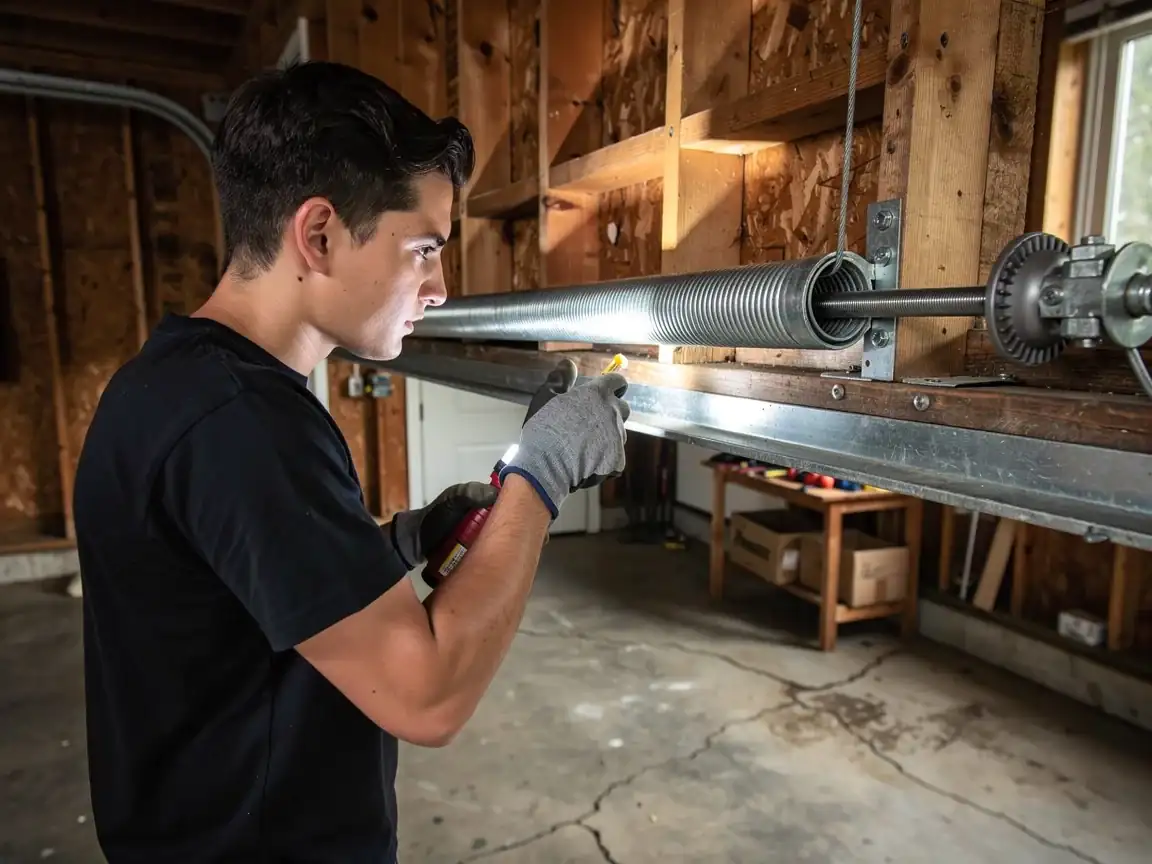
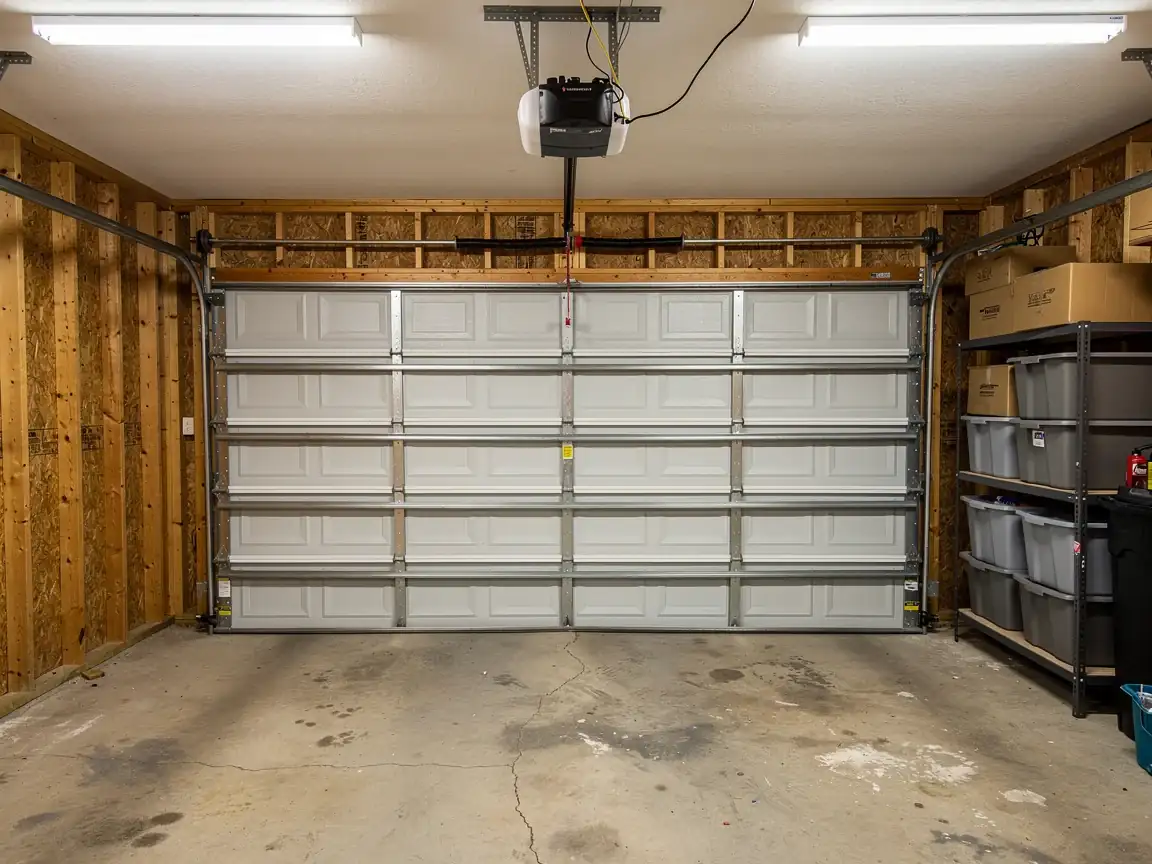
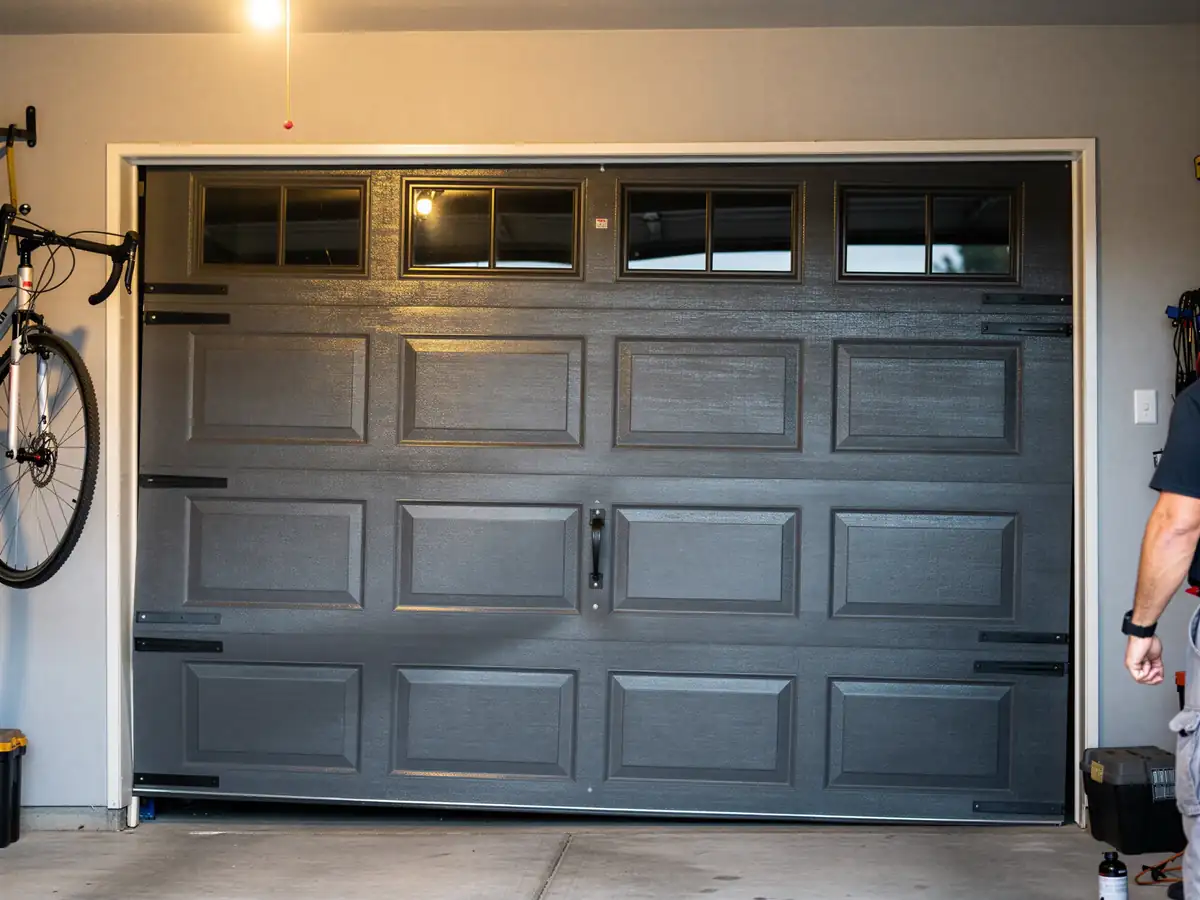
On a door built around 2000, the first sign is usually the opener straining on the last foot of travel, or reversing partway up for no clear reason. That's not a sensor glitch most of the time - it's a spring that's lost tension and is making the opener do work it was never sized for. You might also notice a loud bang from the garage followed by the door refusing to open at all; that's a torsion spring letting go, and it's common on doors from this era because the original springs were rated for a 7-to-10-year cycle count that's long since been used up. A second symptom shows up on hot afternoons: these are 1980s-through-2004-era tracks and openers running in a severe-heat climate, and the metal track brackets expand enough by late afternoon that a door running fine at 8am binds at 4pm.
Why This Fails Locally
The reason this isn't generic garage door wear is the combination of Vineyard's housing age and the climate band it sits in. A median year built of 2000 means the original springs, cables, and rollers on a lot of these doors are now at or past their rated cycle life, and they're doing that work inside a severe-heat climate zone that puts extra stress on lubricant, rubber seals, and metal expansion tolerances every summer. A door built the same year in a mild climate would be showing less wear right now. Vineyard's isn't that door. We see this pattern across the area's roughly 12,491 households, concentrated in homes from the same build era, which is why the failures cluster by age rather than by one bad batch of hardware.
What the Repair Takes
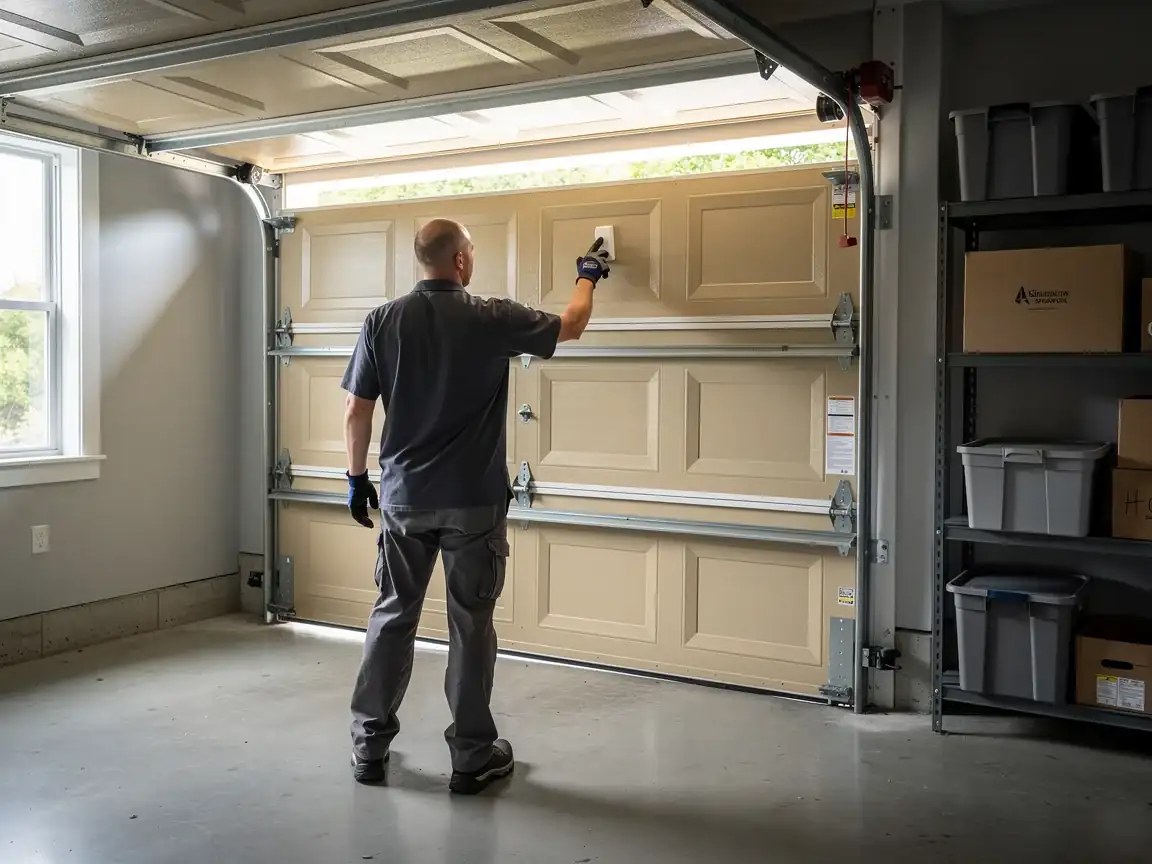
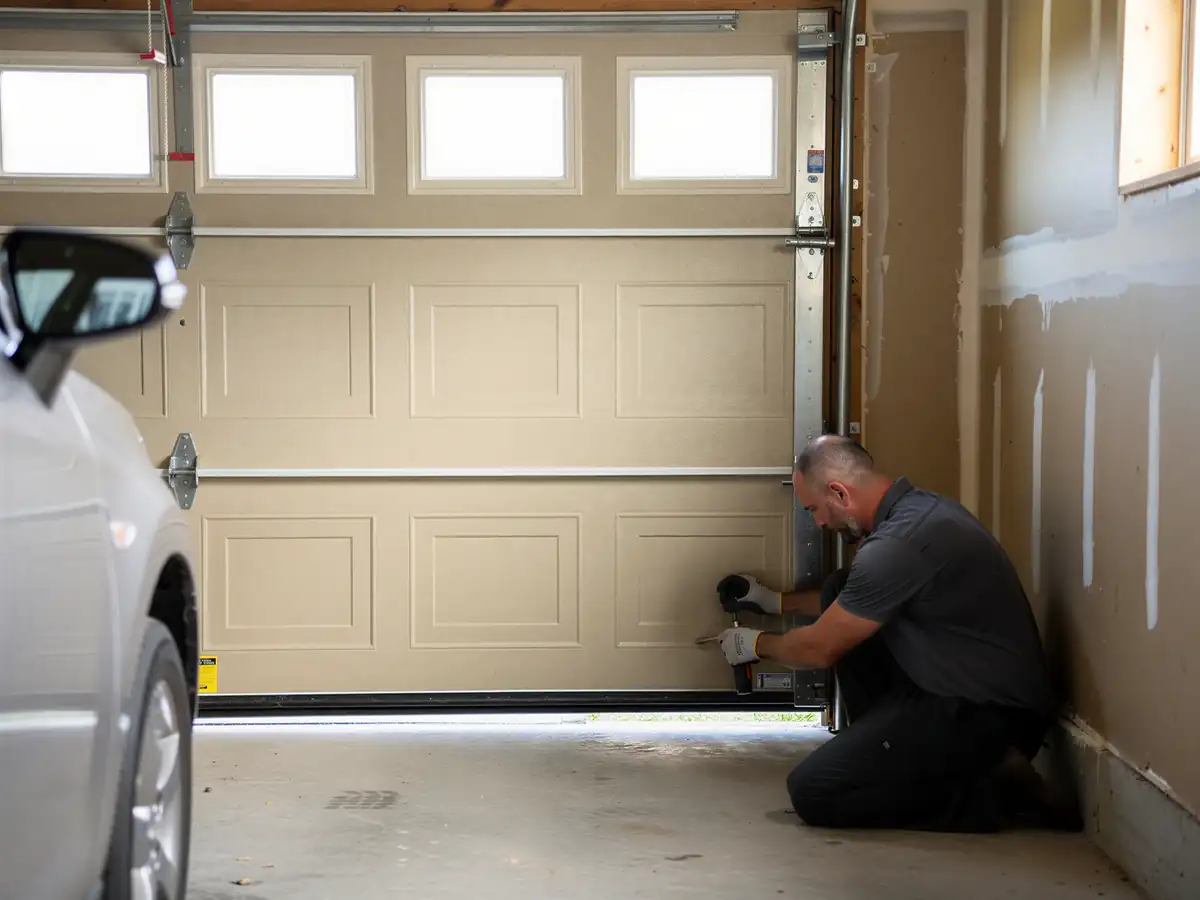
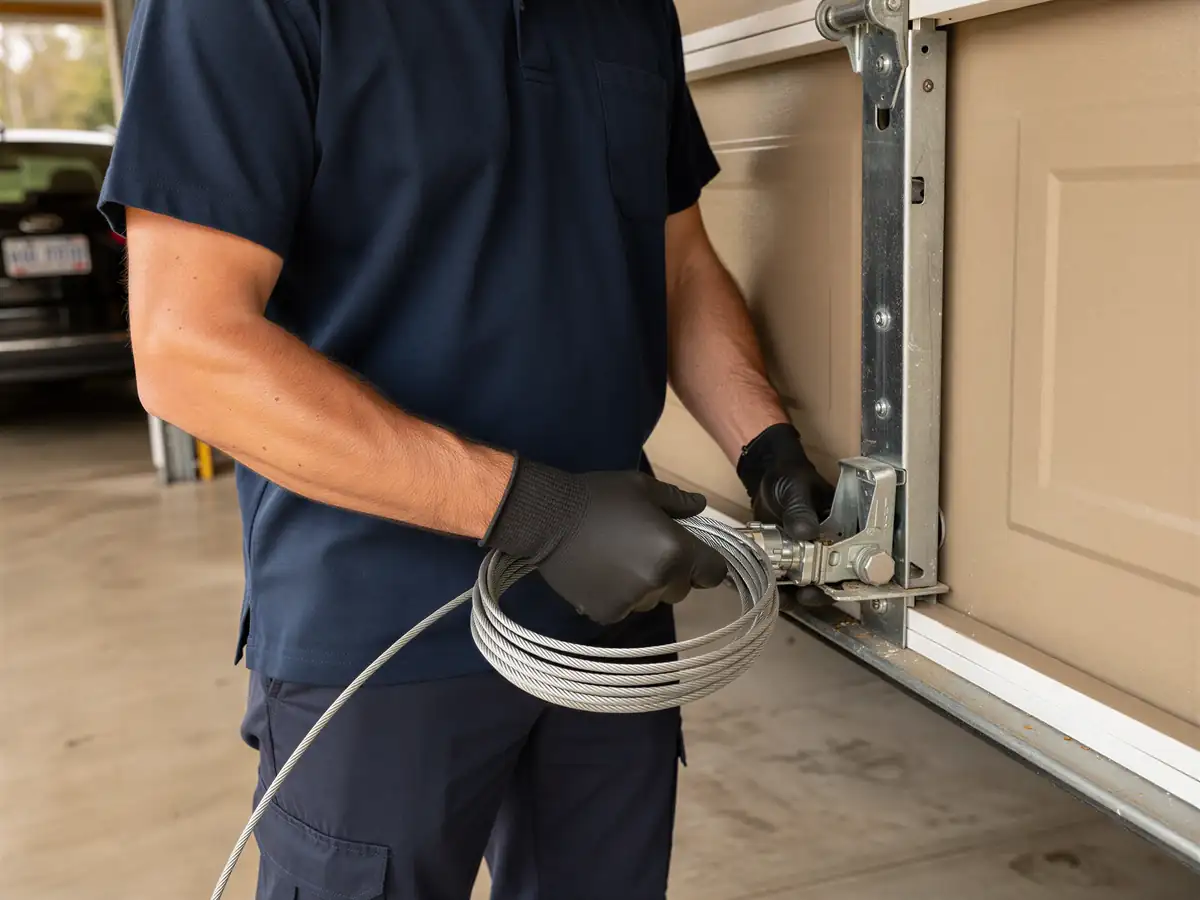
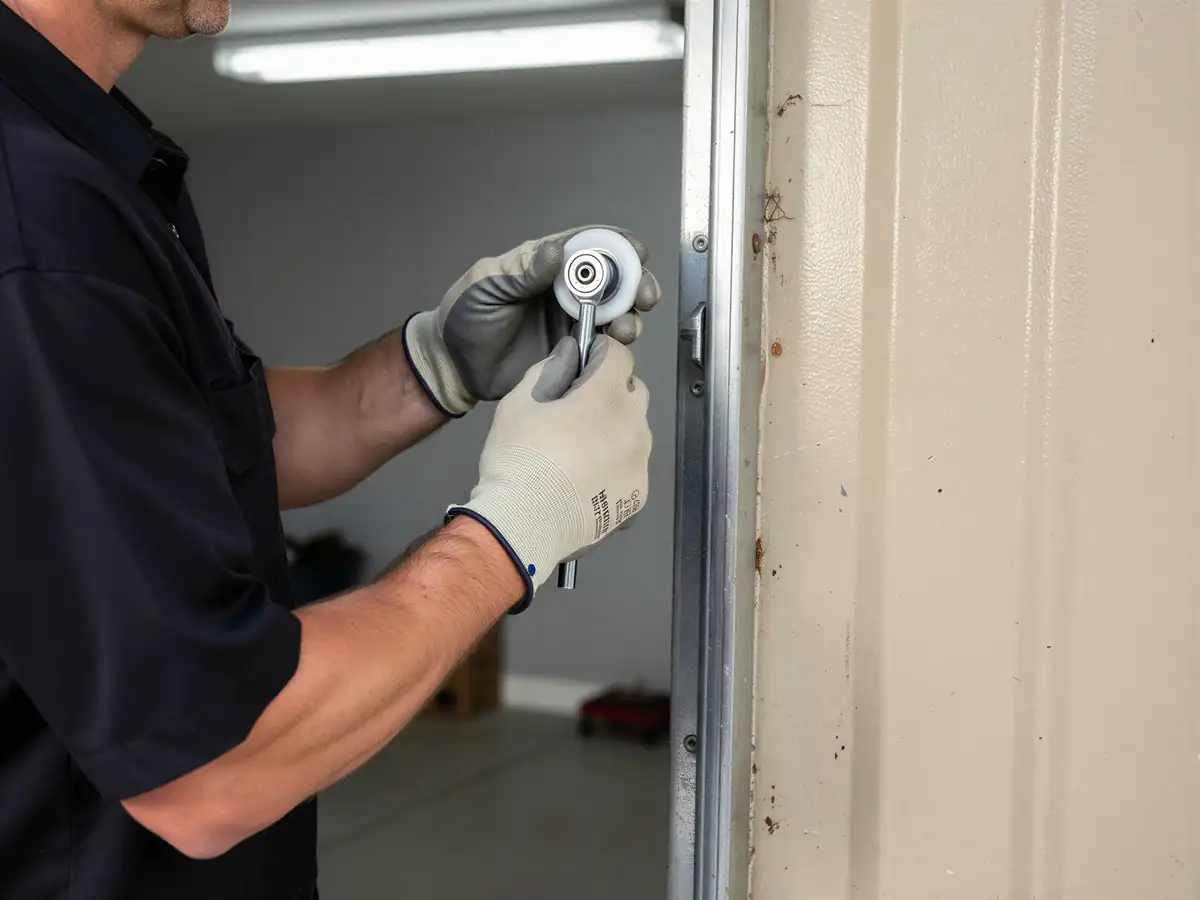
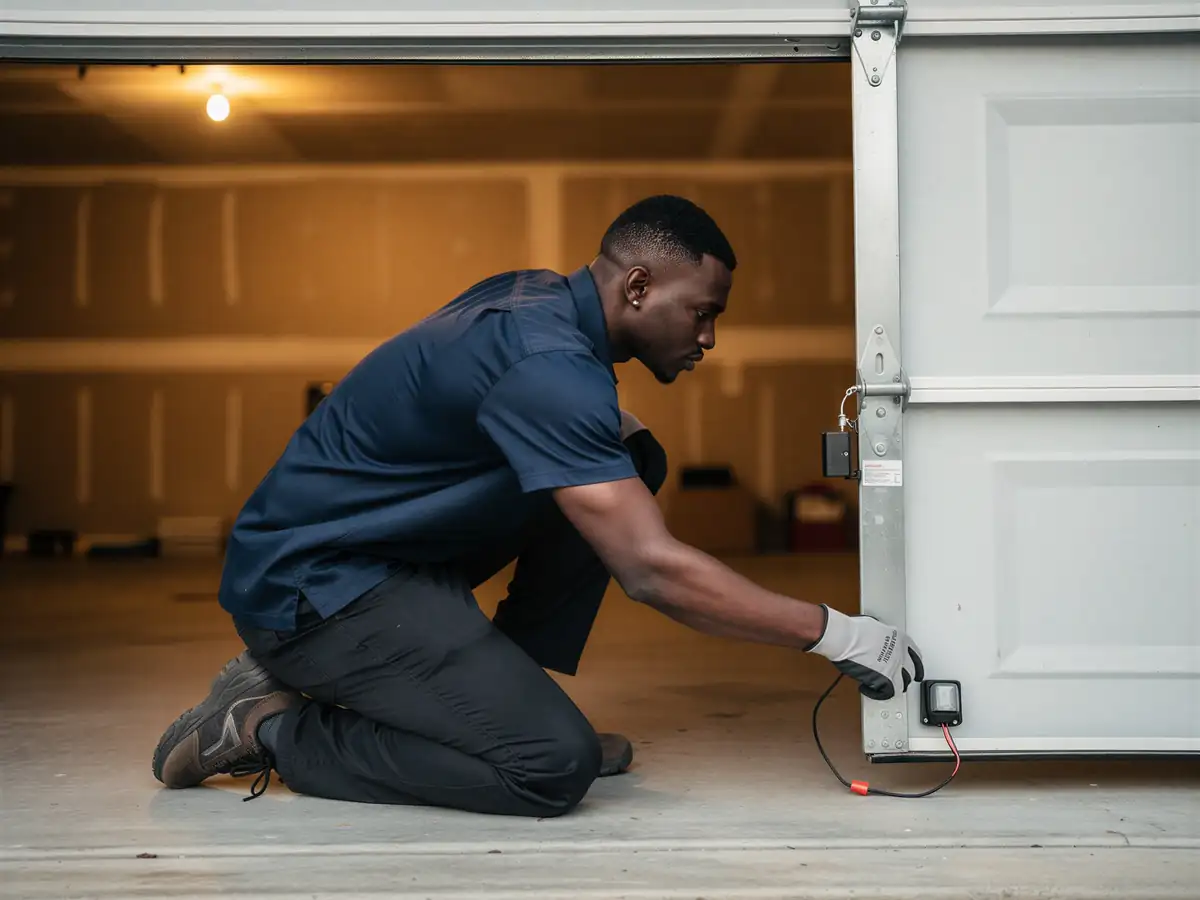
We run the 15 miles out from Citrus Heights for spring, cable, track, and opener repair in Vineyard, and for full door replacement when a repair doesn't make sense anymore. On a door from 2000, we'll usually check both springs even if only one broke - they're the same age and wear at close to the same rate, so replacing one and leaving the other is a short-term fix. Opener boards on failing units sometimes need a part we don't carry on the truck; if that's the case, we'll be straight with you about the wait instead of guessing. We don't install off-brand opener logic boards we can't warranty, and we'll say so rather than pretend otherwise.