Can You Do This Yourself
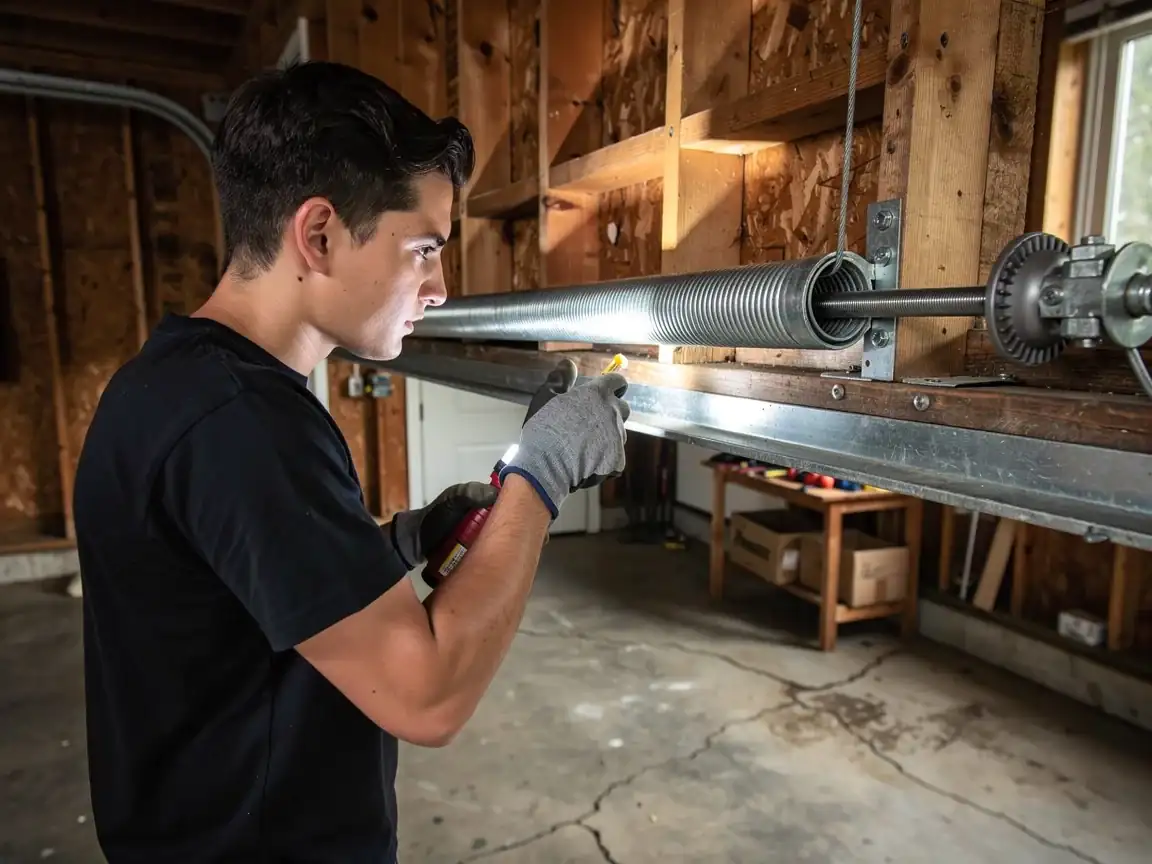
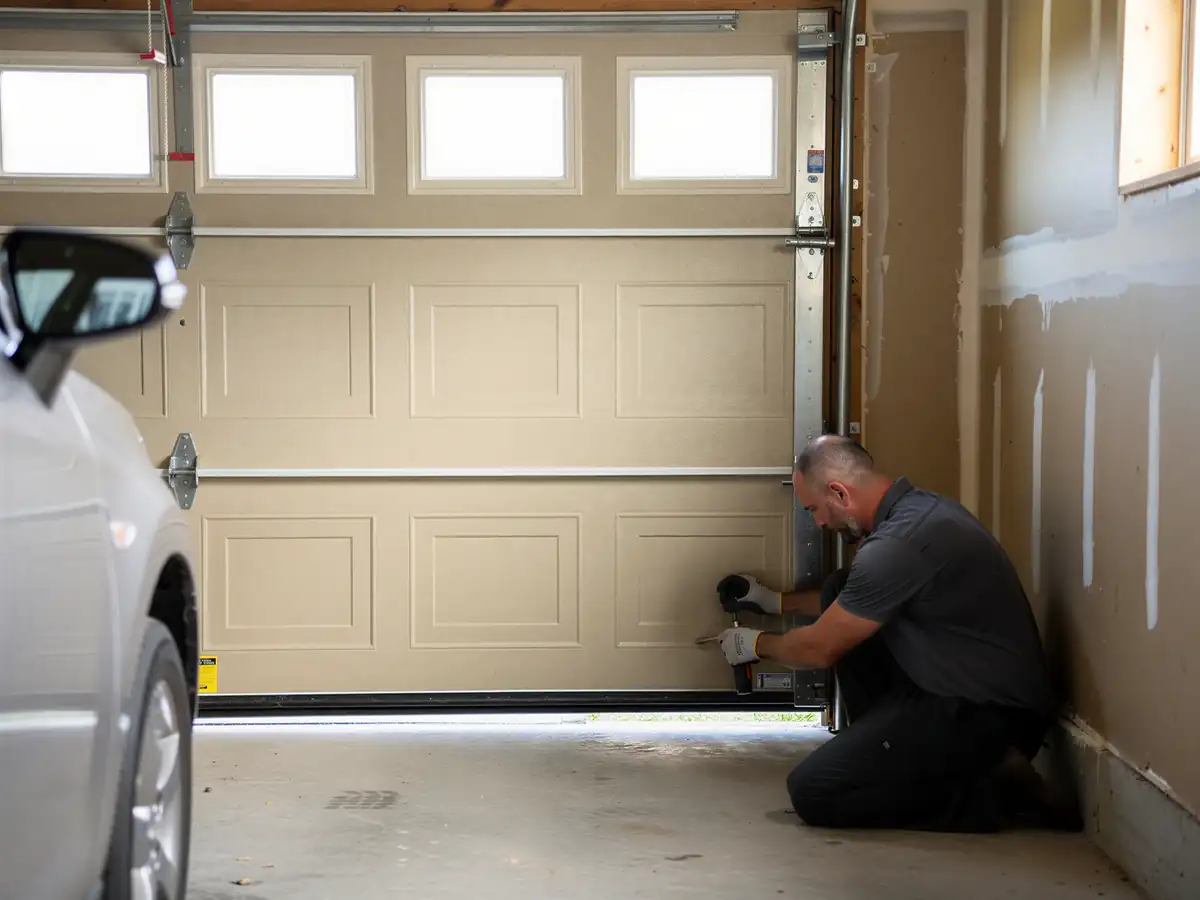
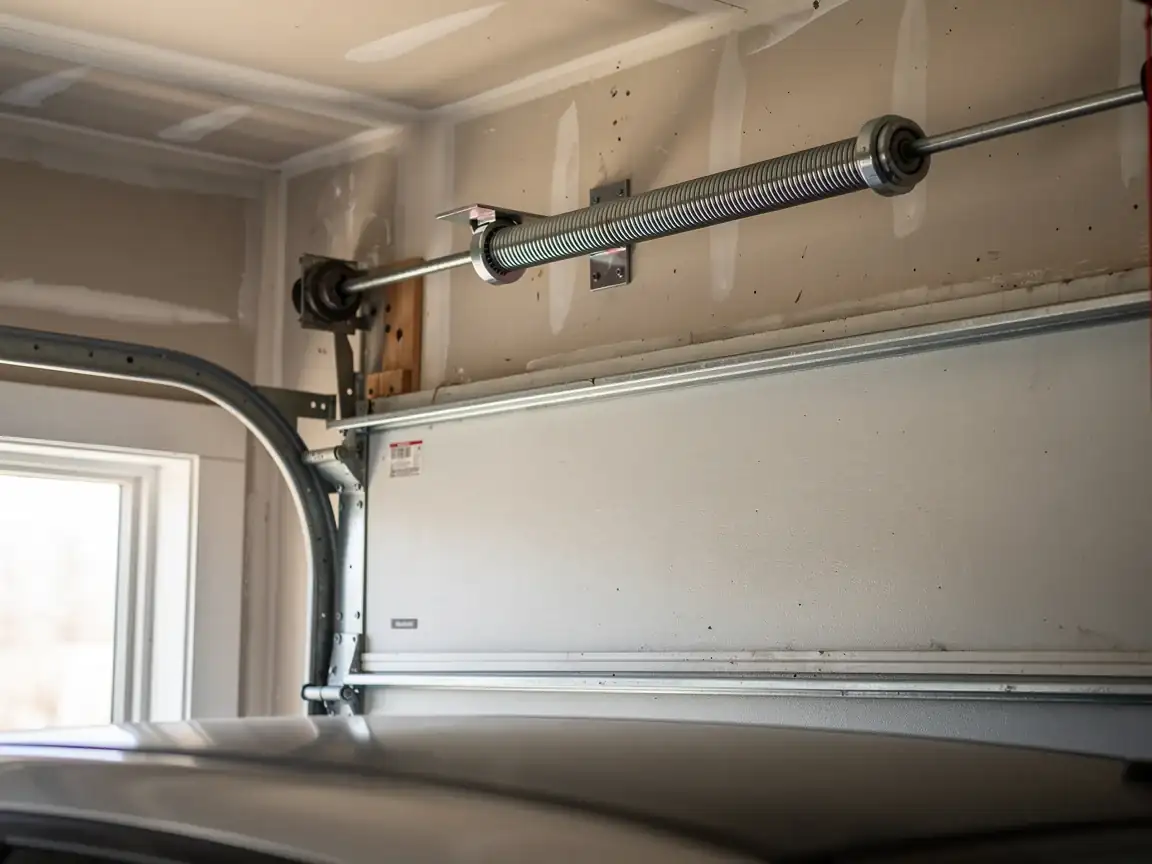
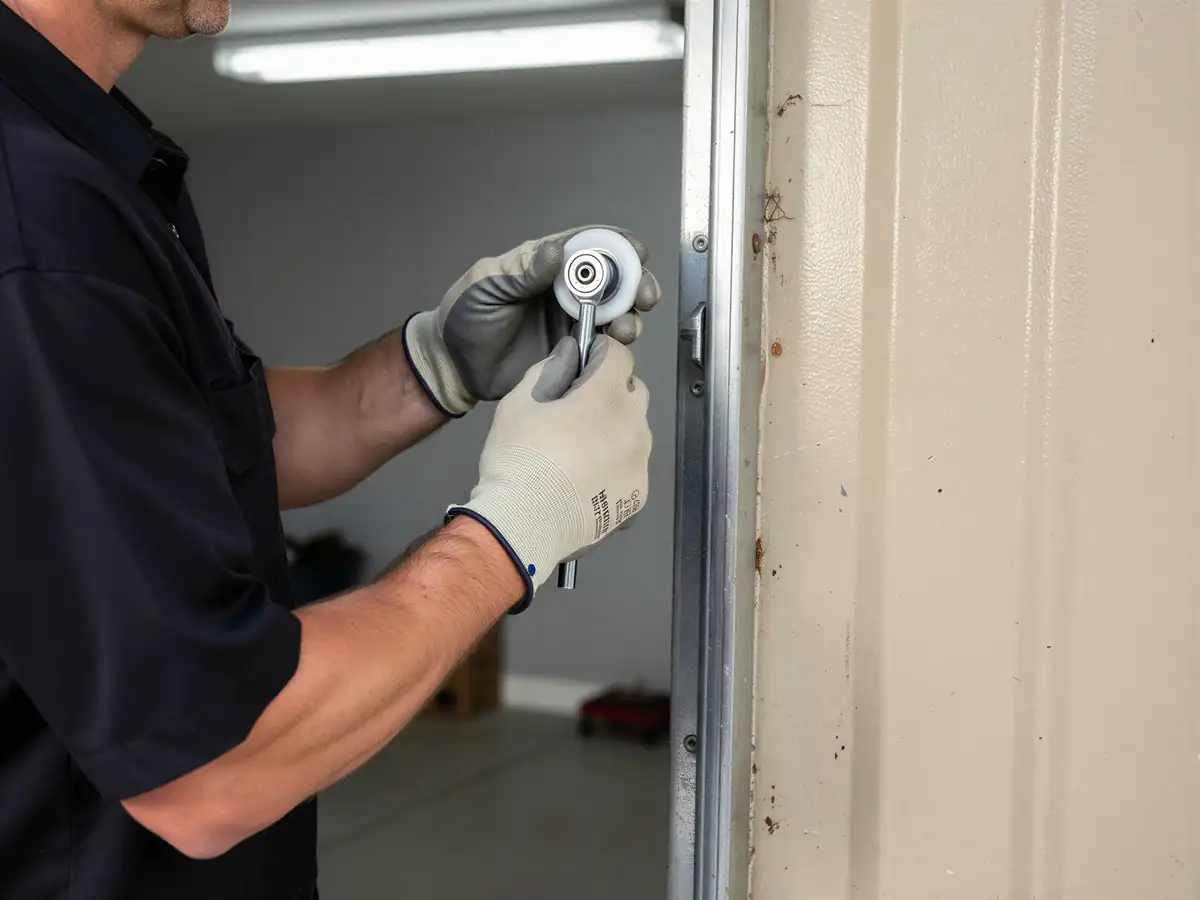
Swapping out garage door rollers is one of the more doable DIY jobs on a garage door, provided the door is already down and secured and you're not touching the torsion spring. You release the track retainer, slide the old roller out of its bracket, and set the new one in. Nylon rollers run a lot quieter than the stamped-steel ones that shipped on most doors built in this area's main building era, and a lot of homeowners upgrade to nylon while they're in there.
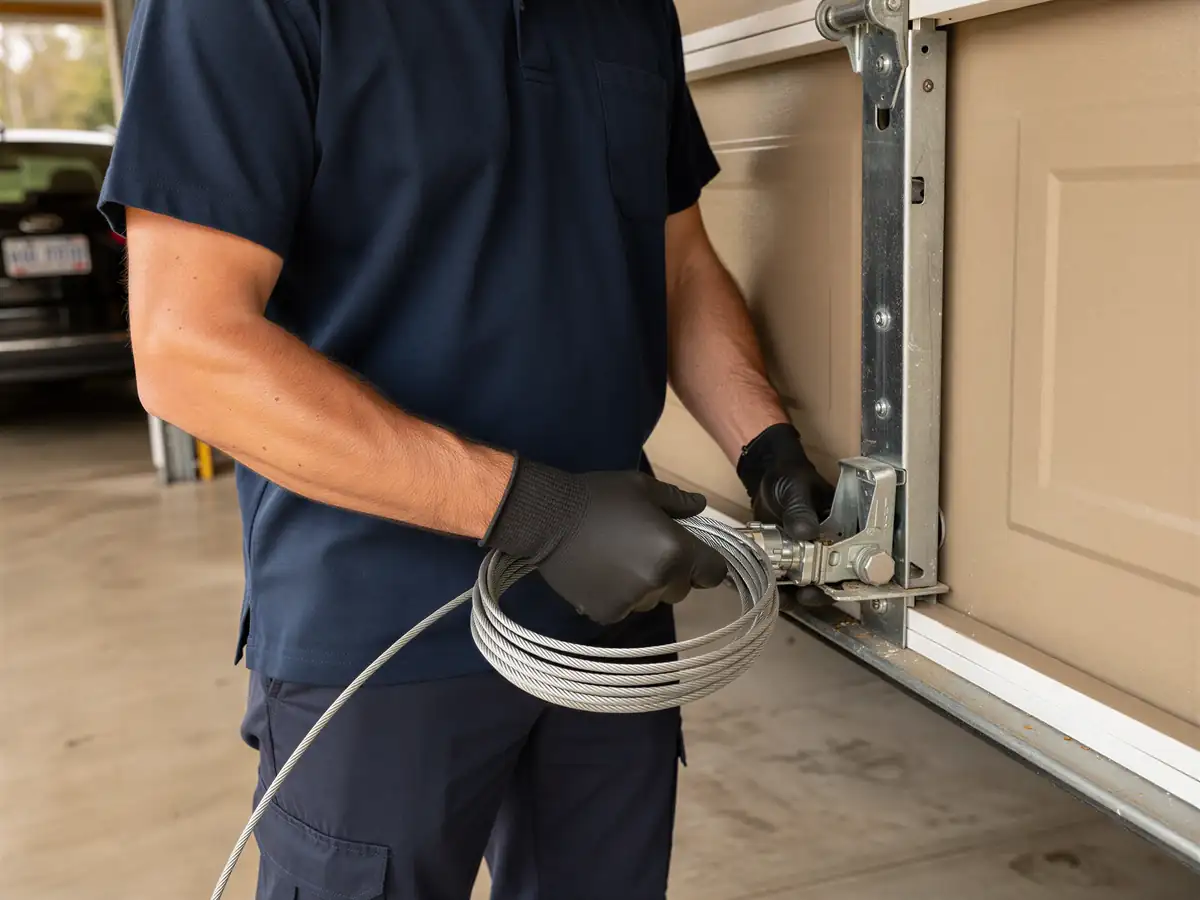
Where it gets harder: the bottom brackets on older doors are under spring tension, and prying one open without knowing which way the cable is routed is how people lose fingers. If a roller has already jumped the track and bent the rail, that's not a swap-the-part job anymore - the track itself needs straightening or replacing, and that's where we'd tell you to stop and call rather than force it back into alignment. We won't pretend every roller job is a call-us job. Plenty aren't. But once a bracket's involved, it is.
Why This Fails Locally
Most of the housing across this service area went up between 1962 and 2004, with the bulk of it dating to the 1980s and 90s. Doors from that stretch were built with steel rollers on steel brackets, no nylon bushing, no grease fitting most owners ever used. Forty-plus years in, those rollers are dry, pitted, and running metal-on-metal inside the track.
The heat here makes it worse. This area sits in a severe-heat climate band, and garage interiors routinely run well above outdoor temperature in summer. Steel expands under that heat and contracts again overnight, and that daily cycle works the roller stem loose in its bracket faster than it would somewhere milder. Nylon rollers that were never built for this kind of thermal swing crack and shed chunks instead of just wearing round.
So the pattern we see across 1980s and 90s tract construction in this area isn't random - it's rollers nearing or past their service life, running in brackets that have never been lubricated, inside a garage that cooks every summer afternoon. That combination is what turns a quiet roller into a grinding one, and a grinding one into a derailed door.
Getting It Booked In
We run roller jobs across the full service area this page covers, not just the immediate neighborhood
Foothill Farms, Orangevale, Fair Oaks, Antelope, North Highlands, Carmichael, Gold River, McClellan Park, Granite Bay, Rio Linda, Elverta, Loomis, La Riviera, Mather, Rosemont, Penryn, Newcastle, Lemon Hill, Vineyard, Florin, Parkway, Cameron Park, West Sacramento, Rancho Murieta, Shingle Springs, Sheridan, North Auburn, Wilton closer.
Most roller jobs are a single visit
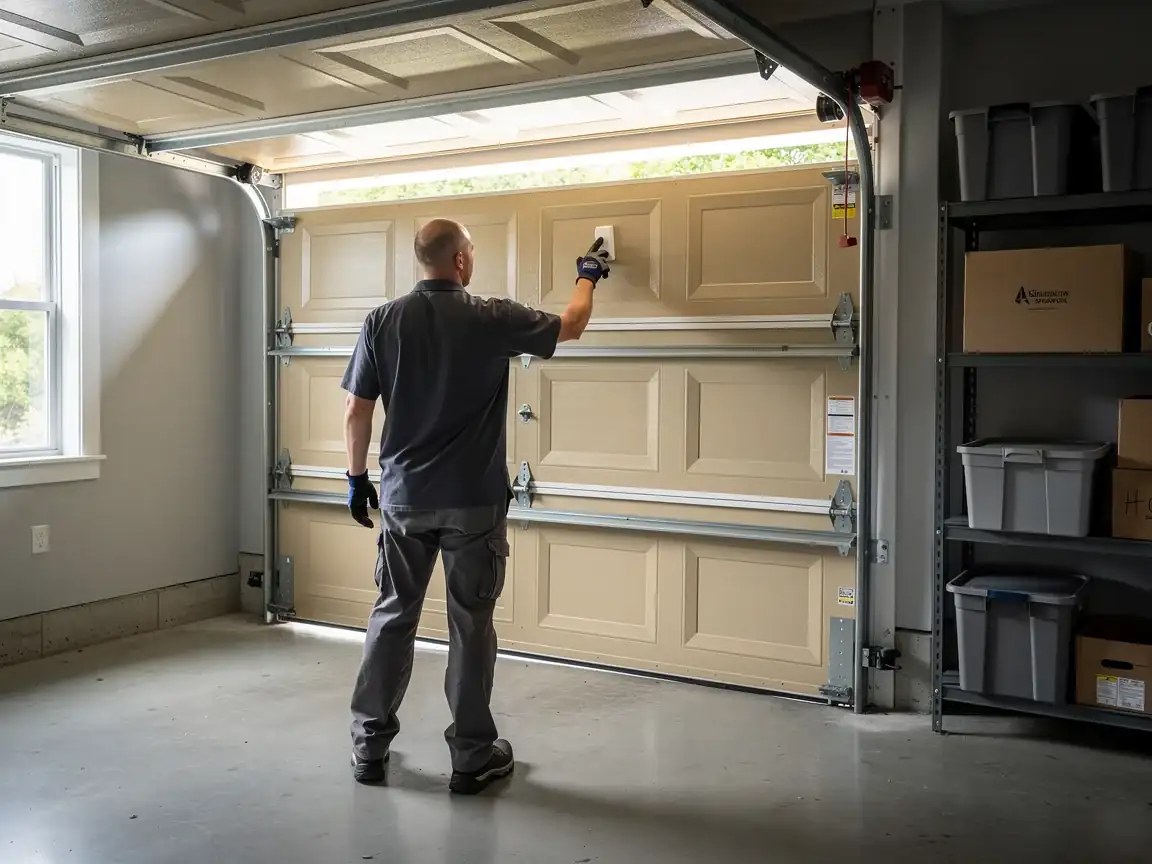
We check every roller on the door, not just the one that's loud, since if one's worn the rest from the same install are usually close behind. If the track's bent or a bracket's cracked, we'll say so before we start rather than after.
Start from the home page to reach us and get a visit scheduled
The Symptom
The usual first sign is noise - a rhythmic grinding or clicking as the door moves, timed to how fast the rollers are turning. That's different from the deeper bang of a spring issue or the straining whine of a failing opener motor. As it gets worse, you'll feel the door hesitate or jerk at certain points in the track, usually right where a roller's flat-spotted or cracked.
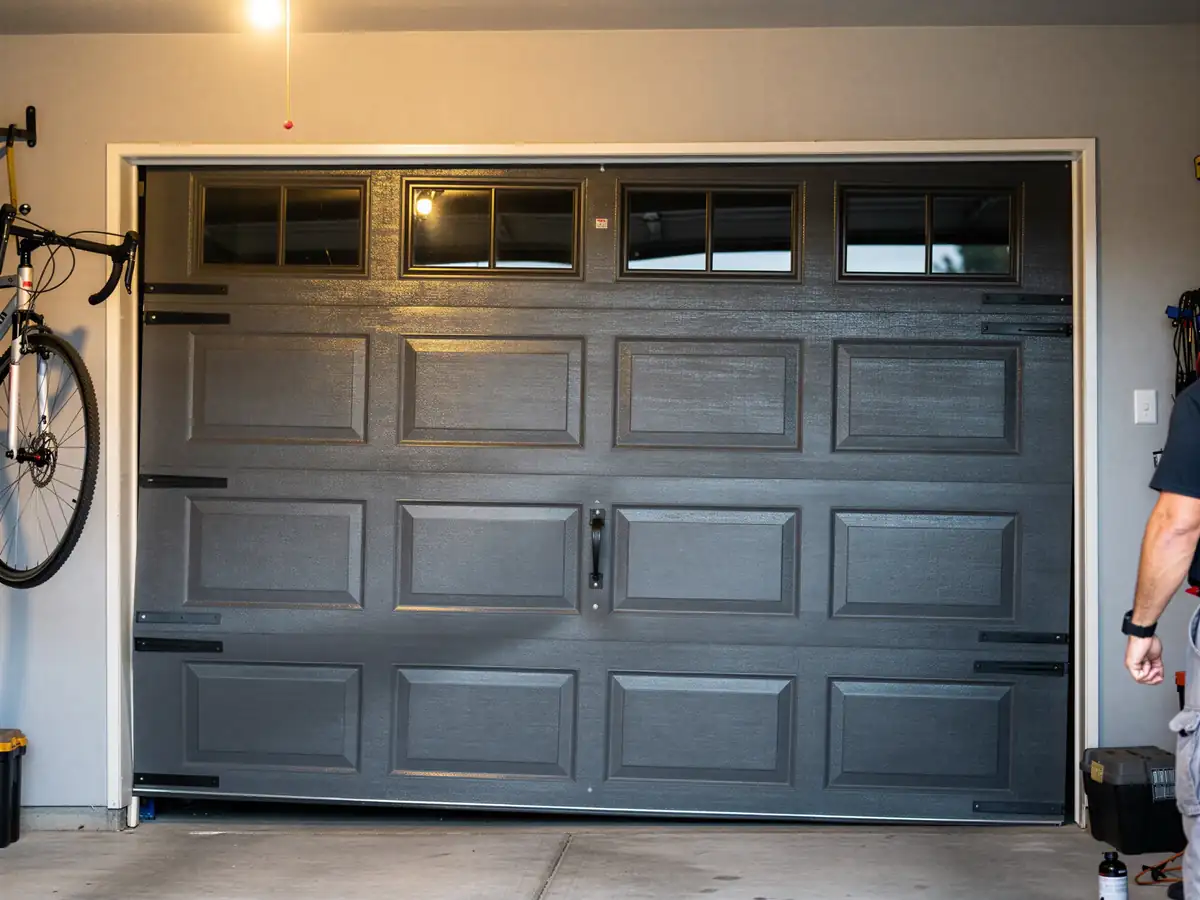
Left alone, a bad roller eventually jumps the track, and the door binds hard or won't move at all. Given how much of the housing in this area carries original 1980s-vintage steel rollers, and how hard the summer heat works that hardware, catching the grinding stage before it becomes a jumped track is the difference between a short roller job and a track repair.