What the Weather Here Does to It
Citrus Heights sits in a severe-heat climate band, and that heat is hard on the electronics inside a garage door opener. The circuit board, the capacitor, the logic board that reads your remote signal - all of it sits in a garage that can run twenty degrees hotter than the outside air by mid-afternoon. Heat doesn't just make an opener uncomfortable to work on. It shortens the life of the components that control it.
A lot of the openers we see in this town were installed when the house was built, and most of this housing stock went up between 1962 and 2004, with a lot of it clustered in the 1980s and 90s. That means a sizable share of the units out there are chain-drive or screw-drive models from before battery backup was standard, and before manufacturers started building boards rated for sustained heat exposure the way current ones are.
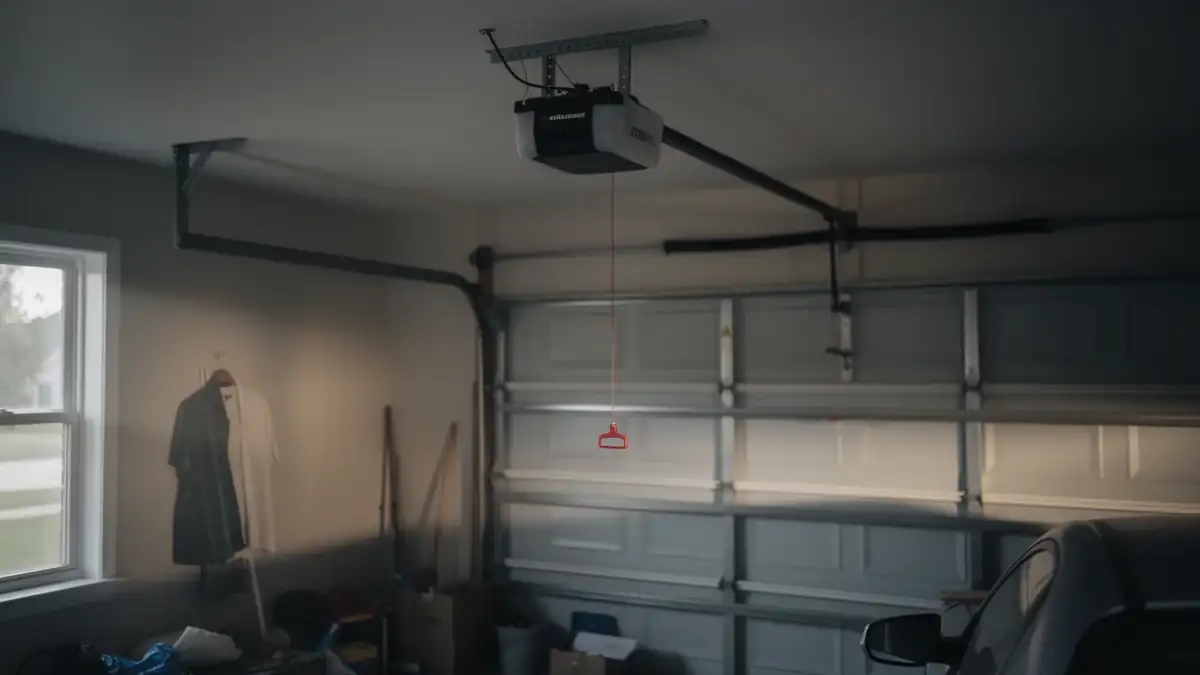
When the power goes out - which happens more during heat-load periods when the grid is under strain - an opener without battery backup just stops. No light, no remote, no keypad. The door still opens by hand once you pull the release cord, but people forget where that cord is until the one day they need it.
What Is Going On
Two different problems get lumped together as "the opener's broken" and they need different fixes. One is a power cut: the breaker tripped, the outlet died, or the whole block lost power, and the opener itself is fine - it just has nothing to run on. The other is an opener that's actually failing, usually the circuit board or the motor capacitor, and heat is almost always part of that story in a climate band like this one.
In houses built in the main run of this area's construction, 1962 through 2004, a lot of original openers are long past a normal service life even if they still limp along. Boards that have cycled through twenty-plus summers of garage heat tend to show it as intermittent response - works today, dead tomorrow, works again after it cools down. That pattern is the board telling you it's on its way out, not a wiring problem.
If your opener dies during a power outage and comes right back the second power is restored, that's not a repair call - that's the system working as built. If it stays dead after power is confirmed restored, something inside failed, and that's worth a look.
What It Costs
We don't have a flat number to quote you here
And giving you one without seeing the unit would be a guess dressed up as a fact. What drives the cost is whether you're looking at a repair - board, capacitor, sensor - or a full opener replacement, and that split often comes down to age. An opener original to a house from the earlier part of this area's 1962-2004 building run is usually past the point where a board swap makes sense; parts for some of those older chain-drive units are getting hard to source at all.
Household income in this service area runs at a median of $95,592
Which tells you this isn't a market where people are choosing the opener on price alone - most want it fixed right the first time rather than cheapest. That matters when you're deciding between patching an aging unit and putting in a new one with battery backup built in, which solves the power-cut problem permanently instead of leaving you pulling a release cord during every outage.
When Waiting Is Fine
Not every dead opener is urgent. If the power's out across your street and the opener goes dark with it, there's nothing to fix - wait for the power company, and use the manual release to get the car out if you need to. That's the door and opener doing exactly what they're built to do.
Same goes for an opener that's old but still working. If it's original to a house from this area's main building years and it still opens reliably, just slower or louder than it used to, you don't need to replace it out of worry. Run it until it actually gives you trouble - intermittent response, grinding, or refusal to close - rather than swapping it on a hunch.
The case where waiting isn't fine is a board that's already showing heat-related intermittent failure. That pattern gets worse, not better, especially heading into the hotter months, and it tends to fail completely at an inconvenient time rather than a convenient one.